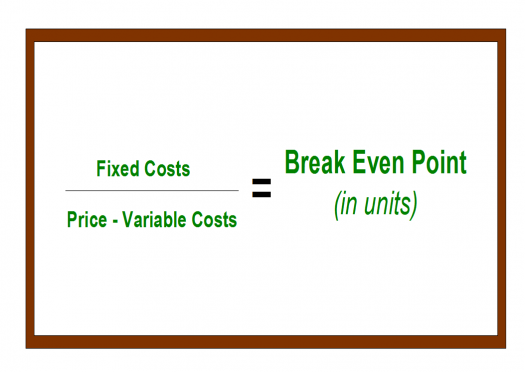
Knowing your break-even point, the sales level needed to cover all costs before any profit begins, turns vague sales hopes into a specific, measurable target every small business owner can work toward.
Fixed costs, such as rent and salaries, remain constant regardless of sales volume, while variable costs, such as stock or materials, rise and fall directly with each unit sold.
Dividing total fixed costs by the profit margin earned per unit sold gives the number of units that must be sold to break even, after which every additional sale contributes to genuine profit.
A shop with fixed monthly costs of thirty thousand shillings and a profit margin of one hundred shillings per unit needs to sell three hundred units monthly simply to cover costs, a concrete target far more useful than a vague sales goal.
Recalculating your break-even point whenever fixed costs change, such as hiring staff or moving premises, supported by organized records through paperlesskenya.co.ke, helps you evaluate major decisions with real numbers rather than optimism alone.
A clear break-even figure transforms abstract sales goals into a concrete, motivating target that guides everyday pricing and cost decisions.
Monthly is generally sufficient for most small businesses, though downloading immediately after any unusual transaction is worth doing to investigate promptly rather than waiting for the next statement cycle.
A clear break-even figure turns abstract sales hopes into a concrete, motivating target for everyday pricing and cost decisions.
Gather your current fixed and variable costs and calculate your specific break-even point this week, giving you a concrete number to measure future sales performance against.
A clear, calculated break-even figure turns abstract sales hopes into a concrete, motivating target for everyday decisions.
 Paperless


